 Facebook
 X (Twitter)
 Reddit
 Pinterest
 Tumblr
 Delicious
 LinkedIn
 StumbleUpon
California 4-H Youth Development Program
4-H Alumni lead UC ANR
The 4-H program and Cooperative Extension in all states are supported through the state's land grant university. The University of California Agriculture and Natural Resources (UC ANR) supports us here in California. We are unique in having two 4-H Alumni leaders
They share their 4-H stories and the influence it has had on their lives.
Latest posts on the California 4-H Grown blog
California 4-H Horse Classic Team Excels at National Western Roundup
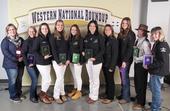
The California 4-H Horse Classic Team traveled to Denver, CO in January to represent California 4-H at the National Western Roundup. The Horse Classic team included Pyper, Skyler, and Maya from Marin County 4-H, Merideth from San Diego County 4-H, and Lillie, Sarah, and Catherine from Riverside County 4-H. This talented...
Mission Possible: 2024 Camping Conference
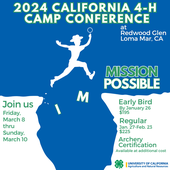
Your mission, if you so choose to accept it, is Anything is Possible! Do you want to take your camp experience to the next level? Are you a camp staff, leader, or director looking to refresh your camp program? The 2024 California Camping Conference offers the latest and greatest insight into the ideal camping experience!...
Journey to Victory at the 4-H FCS National Championship

I'm Lily Q from Contra Costa County and I was declared the Overall Champion of the National Fashion Revue Constructed Category at the 4-H Family & Consumer Science (FCS) National Championship 2024 in San Antonio, Texas. I have a passion for sewing and fashion. I have been learning how to sew since I was 8 years old....
Young people in 4-H are uniquely prepared to step up
to the challenges of a rapidly changing world.
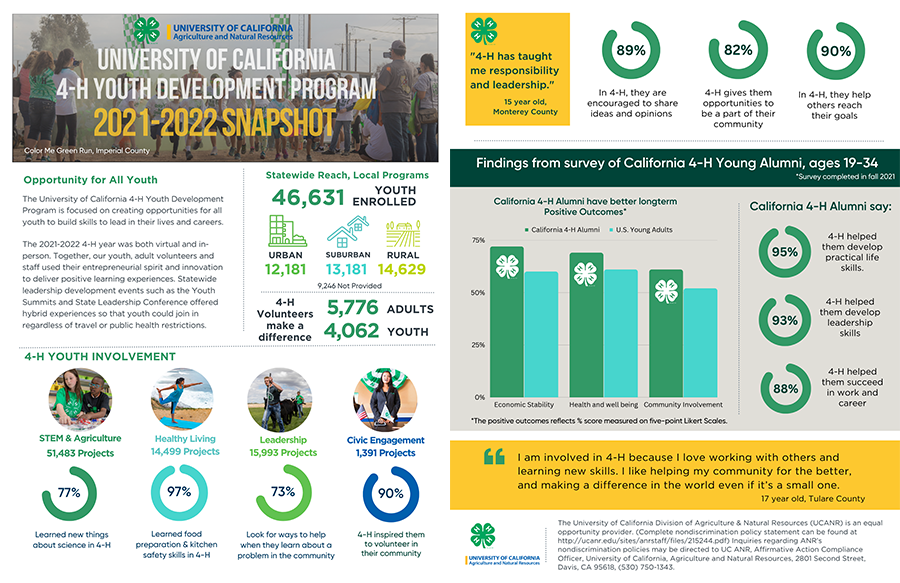
Through hands-on learning and positive youth-adult partnerships, youth acquire knowledge and develop life skills that enable them to find and focus their energy into their passions while also giving back to the community.

The 4-H Youth Development Program in California is open to young people and adult volunteers from all backgrounds and locations in California.
COVID-19 update
Updated June 7, 2023
4-H activities can resume in-person, following Basic Safety Standards. Please see our COVID In-person Updates page to view the Basic Safety Standards, effective September 2, 2022. Get information about COVID-19 at ANR Environmental Health & Safety.
Your county 4-H office is your main contact in 4-H!
- Join
- Renew
- Volunteer
- Questions/concerns about 4-H in your county
Find Your County 4-H website

100% of your donation to the California 4-H Foundation goes toward strengthening 4-H youth development programs in the local counties.

Shop 4-H

The official source for 4-H pins, record book covers, club supplies, apparel, and educational curriculum. When you shop with our link, 5% of your total purchases support California 4-H programs!